
It’s Christmas season again and carols are being sung and gifts are being exchanged. But for us, as believers, we know it is more than the songs and food and festivity. Christmas is about a person: the Man Jesus who is Christ. Of all the gifts we may receive this Christmas, we know our best gift is the Son that was given.
I would not like to get into the complexity of the origin of Christmas, discussing whether it is to be celebrated by believers or not. What I believe is more important is what we attribute this season to. We believe Jesus was born in the flesh and we have chosen to celebrate that sacred day as a day of joy. More importantly, we have chosen to see it as the day of our Lord.
But today, let’s dig a bit into the significance of Jesus’ birth.
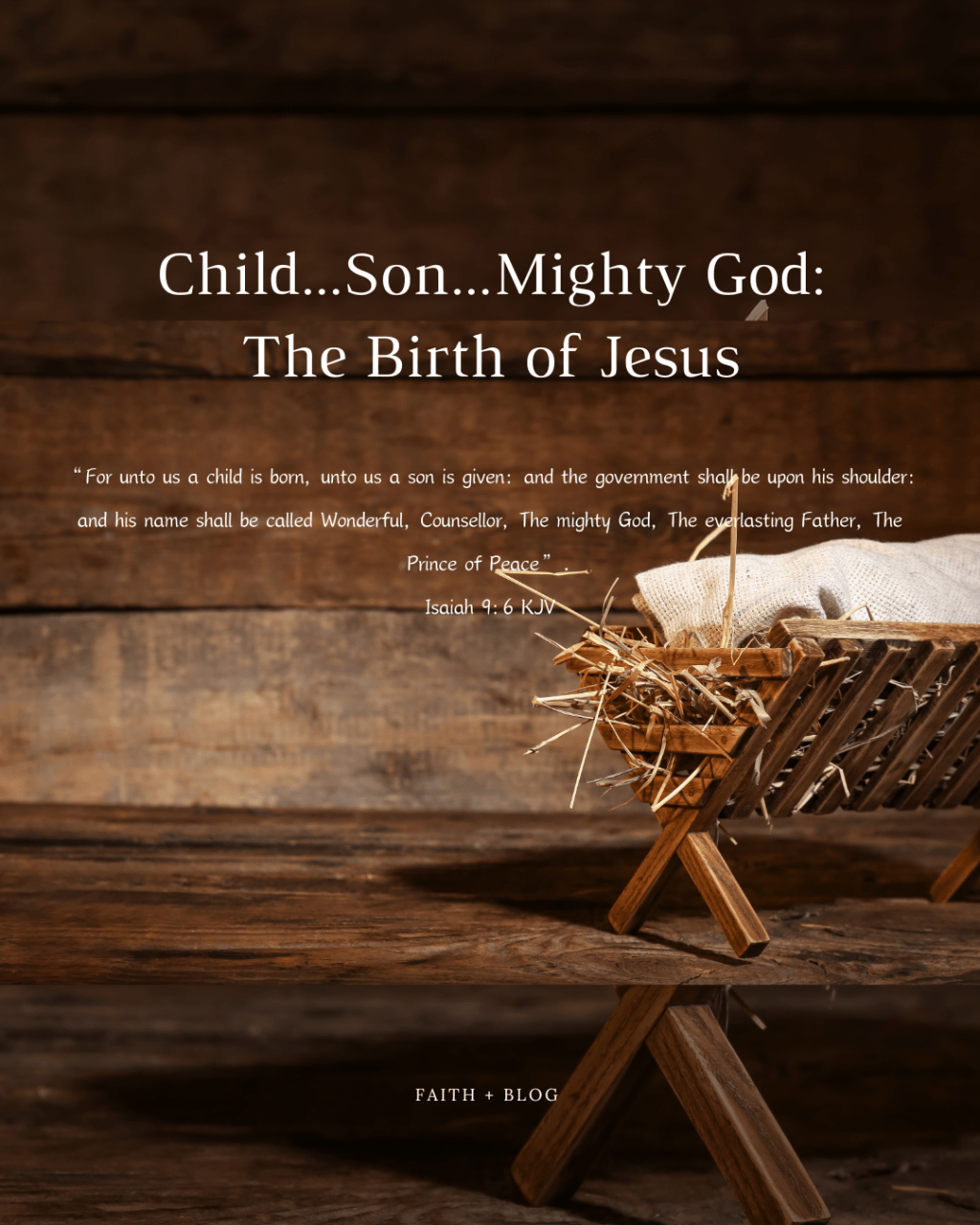
For unto us a child is born, unto us a son is given: and the government shall be upon his shoulder: and his name shall be called Wonderful, Counsellor, The mighty God, The everlasting Father, The Prince of Peace.
Isaiah 9:6 KJV
Unto Us…
Establishing who “us” refers to in this portion of scripture is key to understanding it (Isa. 9:6). When the prophet said “unto us”, he was not just referring to Mary and Joseph. The word “us” in this context refers to the lost, hopeless, and broken (Isa. 61:1-3; Lk. 19:10). Jesus was born for these people; to seek out the lost, restore hope to the hopeless, and mend all that was broken, including our broken relationship with God (2 Cor. 5:18).
The “us” the Child Jesus was born to, is the entirety of the human race; dead, alive and yet to be alive, at His first coming. Jesus was born to us all.
Many people find it easy to believe the birth of Jesus but only a number of people (believers) have come to understand that He was born for them. Jesus was born for our sakes.
The lowly Savior-King
And in the lowliest of conditions, was He born. Jesus was born in the manger (Lk. 2:7). He didn’t come to us in a royal palace. He came to us in a humbling condition, in a manger, in the place where animals feed. Jesus’ birth shows a deeper level of humility.
Some people find it hard to believe Jesus’ deity because it is mind-boggling to them that God should come down to live amongst men. But the truth is, that is how far the Father is willing to go to prove His love (Jn. 3:16; Jn. 15:13; 1Jn. 4:9-10). To take away our sins and bring us back to God, Jesus was willing to leave all of heaven’s glory behind and come to this world surrounded by animals in a manger. (2 Cor. 8:9)
Nevertheless, the wisdom of God was displayed in all this. How befitting, how significant is it that the Lamb of God that takes away the sins of the world was born in a manger! (Jn. 1:29)
A Son…many other sons
Jesus came to show us the way. This is not just a figurative expression of Jesus being The Way to the Father but also a literal claim (Jn. 14:6). Jesus came to show us the way to God’s heart. He revealed God to us. (Jn. 17: 25-26)
There was this idea that the people of Israel had of God as a scary overlord waiting to punish them for every slight mistake. Jesus showed us that this is not true. He came to introduce God as The Father to us. He made us understand that our relationship with God is not limited to a servant-Master relationship alone, that it can actually transform into a son-Father relationship. (Matt. 6:9; Jn. 20:17)
Someone said “The Son of Man came that the sons of men may become sons of God” and that is one of the best summaries I have heard of the gospel. Jesus was born as a child, given as a Son that we may also become sons (and daughters) of God (Eph. 1:5). The alienation we were in before our faith in Jesus set us up for eternal peril (Jn. 3:16) but upon accepting Christ, we were adopted into the family and became sons.
No one understood sonship better than He. And He not only revealed this truth to us, He allowed us in on it.
God is not an angry fellow or a tyrant. Jesus revealed love to us. He revealed God as love to us. This is why Christmas is always associated with love. At least, that is what it should be about. (1Jn. 4:9; Jn. 17:26)
The Child given…
Referring to Jesus as “Child” shows us His humanity. That Jesus came to this earth as a man is not a myth. It is true. So true that some people felt the need to discredit His deity (a mistake on their path).
I like to think that the reason why Jesus often referred to himself as “Son of Man” was to establish the fact that He was fully man (Jn. 1:14). That means He experienced the things we experience; the tiredness, frustration, depression, anger, and also the joys and excitement. He was in touch with his human side too.
Why did he have to come as a human? Why not come as God that He is? This is because Jesus needed to die. A sacrifice of atonement of sins is only complete when the sacrificial lamb has been slaughtered (Lev. 1:4-5). Jesus came as a Man to die for our sins. And before He did so, He wanted to experience the things we experience and feel the things we feel. This is why He can stand before the Father on our behalf, as an advocate. This advocate understands us and paid the ultimate price for us. (Heb. 4:15-16; 1 Jn. 2:1-2)
Mighty God
Jesus was Man without giving up His oneness with God. He did not empty Himself of His divine nature. The latter part of Isaiah 9:6 tells us this. Jesus is called mighty God.
The birth of Jesus did nothing to diminish His deity. While He was fully man, He was fully God –and still is God.
Why was it necessary for God to be born to earth to die? Because the task of dying for the sins of the whole world is one that only God could have done (Heb. 10:12 NLT). Many times we are faced with challenging situations and we jokingly say “only God can do this one”.
The process of cleansing the world of its sins was something only God could do, and so He did so by sending Jesus to the cross. Nevertheless, Jesus lives on and in His divinity, He infinitely lives to make sacrifices on our behalf.
In the real sense, Christmas –that is, celebrating Christ –should be an all-day, every day event. As children of God, every day should be a day to celebrate our Lord and Savior Jesus Christ. However, this particular period weighs the responsibility on us more heavily.

 Faith+blog