
On this day, over 2000 years ago, the crowd stood before two men—Barabbas, the rebellious criminal and murderer, guilty as charged and Jesus, who was blameless and innocent. Yet, a very unlikely exchange took place. The one who was deserving of punishment was exonerated, so that the innocent Man would be condemned in his place. Barabbas is me. He is you. And in many ways, he represents the whole world for whom Christ died.
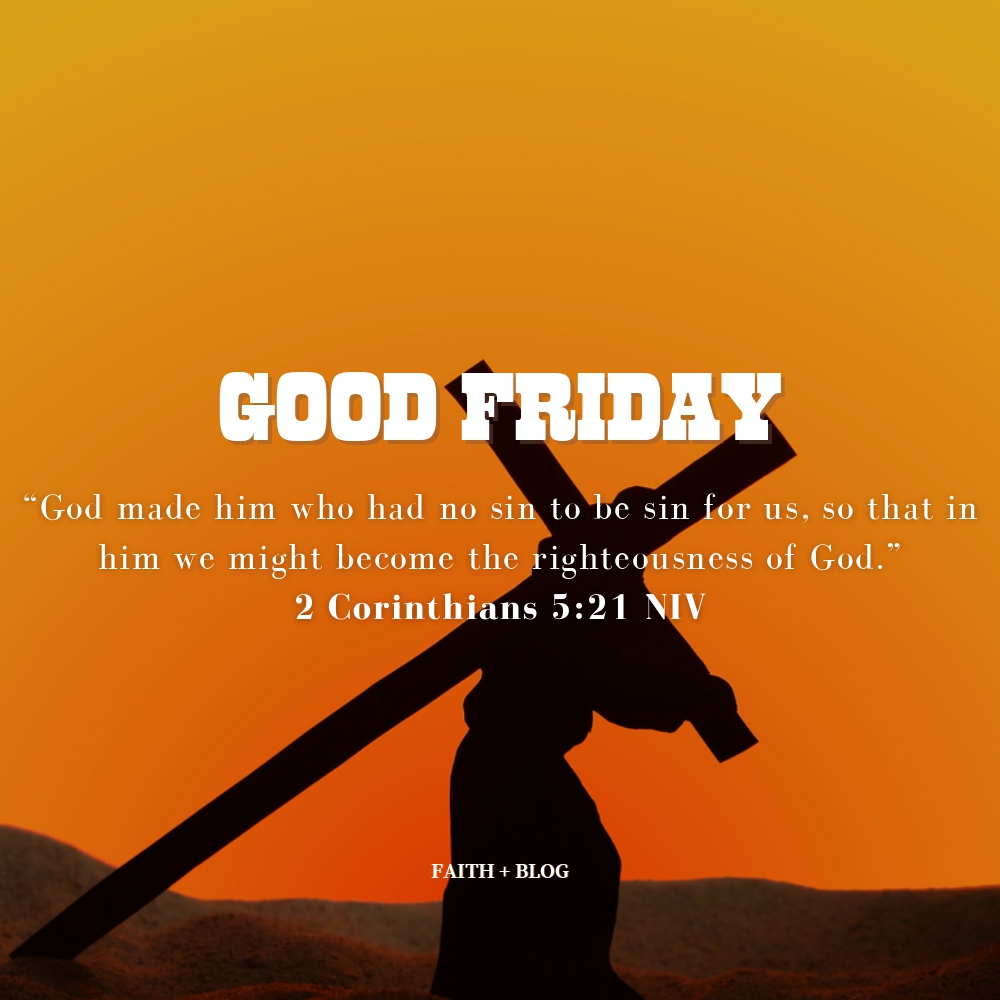
This moment became a live illustration of the gospel written in 2 Corinthians 5:21, “He made Him who knew no sin to be sin for us, so that in Him we might become the righteousness of God.” What happened to Barabbas outwardly is what happens to every believer spiritually. We are set free from our guilt, not because God disregards justice, but because it is satisfied in the sacrifice of Jesus. Like it was for Barabbas, Jesus took our place on that cross that we deserved as people who had fallen short of God’s glory.
The grace of God allowed us access to a forgiveness we didn’t earn. On Good Friday, Jesus bore our sins, so that we could be reconciled with God .
“Christ also suffered once for sins, the righteous for the unrighteous, that He might bring us to God.”
1 Peter 3:18
Ideally, crucifixion was not among the capital punishments practiced by the Jews. Under Jewish law, the punishment for blasphemy—the charge they brought against Jesus—was stoning (Lev. 24:16). Yet the Jewish leaders brought Him before the Roman authorities and He was sentenced to crucifixion. In this, the purposes of God were being fulfilled. Scripture had declared, “cursed is everyone who is hung on a tree” (Deut. 21:23), a truth later explained in Galatians 3:13:
“Christ redeemed us from the curse of the law by becoming a curse for us.”
By being lifted up on the cross, Jesus bore the curse that belonged to us so that, through Him, we might receive the blessing of God.
Likewise, the brutal suffering He endured was not accidental. The mockery, the spitting, the jesting, the scourging, and the piercing were all part of what the prophets had spoken long before concerning the Messiah. As foretold in Isaiah 53:5,
“He was pierced for our transgressions, He was crushed for our iniquities; the punishment that brought us peace was on Him, and by His wounds we are healed.”
What seemed like cruelty at the hands of men was, in truth, the unfolding of God’s redemptive plan. Moreover, Jesus’ suffering was not only about the fulfillment of prophecy, it was also the delivery of a promise; that through His wounds, believers would find healing, peace, and restoration.
“Very rarely will anyone die for a righteous person, though for a good person someone might possibly dare to die. But God demonstrates his own love for us in this: While we were still sinners, Christ died for us.”
Romans 5:7-8 NIV
As Jesus hung upon the cross, bearing the weight of the world’s sin, He cried out, “My God, my God, why have you forsaken me?” (Matt. 27:46). That moment gave a picture of what sin does—it separates humanity from God. The One who had eternally known perfect fellowship with the Father now bore the burden of our sin and its consequence. For a heart as pure as His, this separation was the deepest agony of all. Yet He endured it willingly, standing in the place of sinners, standing in our place, so that we would not have to bear that separation ourselves.
When He finally gave up His spirit, another profound sign followed: the veil of the temple was torn in two from top to bottom (Matt. 27:50-51). This was no small detail. It held great significance.
The veil symbolized the barrier between a holy God and sinful humanity, separating the Most Holy Place from the rest of the temple.
Its tearing signified that through Christ’s sacrifice, the great divide caused by sin had been removed. What once required a high priest to approach on behalf of the people had now been opened to all. We moved from the dreaded Mount Sinai, to the accessible Mount Zion. Through Jesus, we have direct access to God and may now “approach God’s throne of grace with confidence” (Heb. 4:16).
All of this also reveals that Jesus’ death was not merely the result of human cruelty but ultimately an act of His own will. His life was never taken from Him, He laid it down willingly (Jhn. 10:18). And though He was Lord even over death, He humbled Himself to enter it so that He might conquer it, so that through His sacrifice, death itself might be overcome.
“And being found in appearance as a man, he humbled himself by becoming obedient to death— even death on a cross!”
Philippians 2:8 NIV
Then came the final declaration from the cross: “It is finished” (Jhn 19:30). With these words, Jesus proclaimed that the work He had come to accomplish had reached its completion. Every prophecy concerning Him (except His resurrection, obviously) had been fulfilled, and the penalty demanded by the law for sin had been fully paid. Nothing remained to be added, nothing left undone. What centuries of sacrifices and rituals could only foreshadow had now been accomplished in Him. His sacrifice was complete. Perfect even.
Even though the brutality of the torture He endured was enough to claim His life long before reaching the cross, Jesus did not die until the work was finished. In His final moments, He remained in complete authority over His life and mission. And when everything had been accomplished, He gave up His spirit, ensuring that the redemption He came to secure was fully and perfectly completed. Jesus made sure to finish the work He started.
So, what looked like defeat was actually a moment that secured our redemption. What should have been sorrowful brought us the greatest peace and joy we would ever need. It was indeed a Good Friday.

 Faith+blog